Showing posts with label hubris. Show all posts

Tuesday, 7 May 2013

Know When to Get Brutal


I wish the makers of Supernatural had been brutal when it came to the show. It would have saved a lot of people pain. Love is a tricky thing and as a dedicated writer, you love your book. However, sometimes it’s best to know when to give it the axe. Not to slash out the entire thing, I mean certain parts that drag on. Most readers aren’t sipping on a cocktail on some beach. They’ve got busy schedules and manage to fit in a few minutes in their day to read your book. So you have to make sure you don’t have any unneeded details that cause your book to move at a snail’s pace. Always remember: your audience is impatient.
Of course, as with anything you’ve created, you might be a bit too attached to realize which parts of your book should be cut.

How to spot the tricky parts:

1. It’s Getting in the Way of Your Plot
This is the easiest way to spot something unneeded. Some characters or scenes just won’t fit in your main story because they’re redundant. In my story, I had added a rather humorous character but at the end when I wanted to wrap up his story thread, it was getting the way of my climax. I had more important things to take care off and giving him a proper ending was ruining the flow of events, that’s when I realized, I had to bid farewell to him.


2. Take an Honest Look
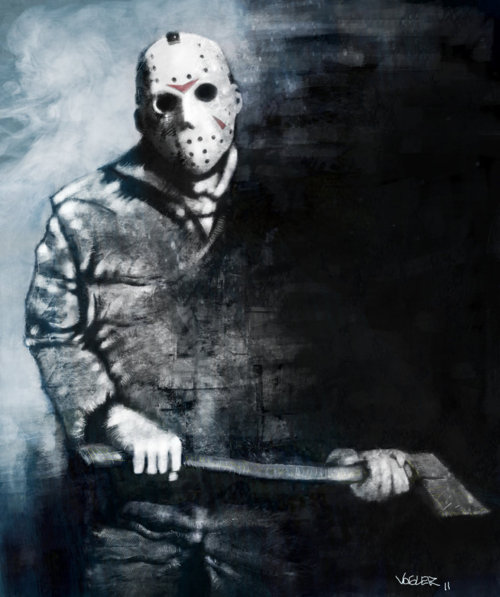
Ask yourself for each scene “Does it give the reader some insight about my character or plot?” If not, pick up the axe. For lack of a better example, I’ll take the movie DrillBit Taylor. He’s a conman who’s hired by three boys who are bullied by a psycho kid in school. Although he’s initially out to get their money, he realizes that his friendship with them is more important and gives the bully an ass whooping (I’ve never used that word before and I now I feel like a poser.) I felt like his love interest seemed rather forced on the plot and was there for no other reason than “because all protagonists end up with a girl.” Could the plot have gone on without her? Yes. Would it have prevented people from taking bathroom breaks when the actress comes on screen? Yep.
No one’s going to take a bathroom break during a boring chapter of your book. They’ll simply put it down and never pick it up again, so learn to get cruel.

3. The Objective Outsider
Sometimes it’s best to get someone elseto read your work. They won’t have the emotional investment in your characters that you do. I realized the value of the outsider when I wrote one of my earliest stories and made my sister read it. When she finished my favorite part of the story, the one that I absolutely adored, she went, “I loved everything but what the hell was the point of that scene?”
The outsider will see boring scenes for what they are. When I ask someone to read my work now, I always beg them to mark the parts that get them bored. It hurts my feelings and improves my work.

Adding flavor and details to your plot is essential and it can hurt when you have to throttle your own creation. I, personally, save my additional details in a separate Word document and keep them for my eyes only. It makes the pain a little less.

So, grit your teeth and pick up your scalpels. 

Friday, 3 May 2013

Coincidences in Your Plot


A short one for today.

What’s wrong with this picture?
“…the girl leaped out of the window and it just so happened that a mattress lay on the street so she was saved. As she got up, it just so happened that a gorgeous man was standing in front of her who helped her up. He’d just broken up with his wife and was looking for love. The two got married and lived happily ever after.”
 
Give your plot a better reason than:
"Why did this happen?"
"Because it just did, okay."
Yes, enough coincidences to make a bad romantic comedy or perhaps that movie The Ugly Truth started out as a sarcastic exercise like the paragraph above (my apologies to anyone who likes the movie).

So, how many coincidences are you allowed to have in your story?
ZERO…or perhaps one if you do it smartly.
A coincidence is just a warning sign that you were too lazy to come up with an actual reason for an incident. Yet you need your plot events to conspire in a way so that the resolution is a good one. Here’s how to handle those tricky coincidences:

Prepare the Audience
Problem: Mr. Evil Villain is strangulating Helpless Heroine when Estranged Brother just happens to walk into her house at that minute and is able to save her.

Fix: Have Estranged Brother look through old photos in a previous chapter and yearn to see Helpless Heroine once again.

Nothing in the outcome changes, but the events don’t sound so random now.

Follow Up
If you don’t want to prepare the foreground, then another good way to counter a coincidence is to follow it up with a plausible story.

Problem: After saving Helpless Heroine, Estranged Brother decides he needs to leave and isn’t seen in the plot ever again.

Fix: Estranged Brother saves her and Helpless Heroine and him patch up their relationship. Estranged Brother sticks around and helps her put Evil Villain behind bars at the climax.
 
This way even though it is a coincidence, it is well disguised. You prove that events in your book have consequences and don’t occur randomly.

Read or Watch Some Murder Mysteries
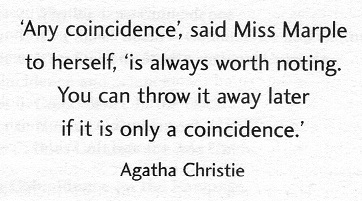
This genre is all about a murder planned right down to the last detail and one mistake bringing the whole thing tumbling down. I personally recommend Agatha Christie (ABC Murders and After the Funeral) because she deals with coincidences so deftly that often they’re too difficult to recognize.
A small side note: Watch Serendipity, a movie based entirely on coincidences, but doesn’t rely on lack of reasoning.

Learning from these can help you hide your coincidences and let your plot run smoothly as possible.

Friends & Family as Proofreaders


I took a hiatus for deciding on a permanent career. And as always, I found nothing. Well, back to business. 
Until you become Dan Brown and have a hundred critics raving about you, chances are the only people who are enthusiastic about your work are the people who are interested in you. If you show your friends and family, do so with caution. Here are some things that you should consider:

1. They Love You

This is my biggest qualm. Your friends adore you. That’s why they’re your friends, but that’s also why they might be blind to your faults. In friendship that’s a good thing, but readers and publishers who have never met you, don’t know the brilliant person you are. They are going to see your work for what it is, so don’t always go by what your loved ones say. When asking a friend for an opinion, make sure it’s a friend who can keep a degree of objectivity with your work.

2. They Aren’t Qualified
My father’s always asking me to show him my work. He’s anxious that I should do my best with my writing and he’d be a bad father if he didn’t make a demand like that. The problem is that my father is just about as lyrical as an (trying to think of a cool simile and I got nothing)…he’s just not very artistically bent. His mind works like a machine, so his internal editor will be looking for ways to make my work worthy of a scientific journal and completely miss the point of my work. Just because people have good intentions, they don’t make good editors.

3. They Might Be Too Qualified
My best friend knows me like a book. It's gotten to the point that even if I don't finish my sentences, she'll know what I'm talking about. So in my stories, even if I haven't described the plot effectively, she understands what I'm talking about. I'm happily convinced that my work is a masterpiece and then find other readers baffled about the plot. 

4. They Aren’t Your Intended Readers
If you’re writing about a teenager’s turmoil in high school and you show it to your mum, she might not give you the advice you need. Reason being that she is not your targeted audience. How about giving it your younger sister? As someone who is actively trying to rise up in the school hierarchy, she might be able to give you better insights. When picking someone to read it, make sure it’s someone who can give you valuable feedback.

5. They Don’t Want To Read It
This is a rehash of something I wrote in an earlier post, but it’s true, so I’m bringing it up again. When a library goer picks up your book and doesn’t like what she sees in the synopsis, she will put it back on the shelf. Loved ones don’t get that option. So instead of saying they don’t want to read your book, they will simply pretend that they’ve read it and tell you it’s the best thing they’ve ever read. If they’re more crafty like me, they will skim into a particular line and criticize it just to make their opinion seem more truthful. My advice is that unless you have gone through at least two revisions of your work and are happy with it, don’t push it onto your friends.

If Not Family, Then Who…?
So you might be wondering you will give you that helping hand and the simple answer is you. Writing is like any other task and no matter how much advice you get about riding the damned bicycle at some point you will have to put your butt on the seat and start pedaling.

1. Practice

You’ll only learn to ride a bike if you practice every day and writing is no different. Some people say you must write a page every day, I think each person should go according to his own schedule as long as they are making some progress. Reread your old works to see what elements you like best and what you want to develop further.

2. Learn From the Best
Fortunately for you, the topic you’re probably writing on is well exhausted. Millions of brilliant writers have already churned out their magnum opus on love or hate or whatever else. Should this discourage you? Hardly. Learn from them. Learn from their mistakes, their success and then add your own unique take on the topic.

3. Take a Risk
No matter how much your parents tell you to keep a steady grip on the handle, at some point you will lose your nerve, the bike will topple, and you’re going to fall. With writing, you have to be willing to take the risk of taking that fall. Keats took that risk and today he’s in every good anthology of poetry (granted, the risk eventually killed him, but that’s another story). Take the fall, patch the bruises, and get back up.

And this reminds me of a Golden Girls moment:

Blanche: Honey it’s as easy as riding a bicycle.
Rose: I never learnt how to do that either.
Dorothy: It’s as easy as falling off a bicycle.
Rose: Well, that is easy! Thanks, Dorothy.

Keep writing!

Tuesday, 19 March 2013

Developing Side Characters

I won’t take the name of the book, but its side characters were so undeveloped, I couldn’t make it till the end. Eight siblings live together but since the author was only concerned with the protagonist, she got married and had children. As for the rest? Two died, while the other five decided to live like hermits with no family. Really? The author couldn’t have spared two lines about how at least one of them finds a spouse?

Within the story, your protagonist is the most important character. But as a writer, you get an aerial view of the story and by now you must know just how important side characters are. If you start them off with a side story and don’t finish it, it’s a loose end. A loose end that your story will eventually trip on and fall. At the same time, you can’t give each person their own saga, so here are a few suggestions about how to make your side characters seem like a fully developed persons existing in their own right.

1. A Strong Relationship
Arthur & Eames' bad relationship was
one of the best things about Inception.
It was not necessary to the plot, but gave
them additional personality.
My current project deals with seven rather important side characters. Two of them were brothers who help out the protagonist. When they seemed too stilted, I made them fiercely competitive. Whenever they’re in a scene, they’ll pass snide remarks about each other. Suddenly from being one dimensional people related to my protagonist, they also have their own life. It tells the reader that although we’re concerned with the heroine, when these brothers leave the pages of the book, they’ll continue living their lives, probably undercutting each other. If your characters connect to each other in ways other than the protagonist, it’ll make them more realistic.

2. Specificity
Sometimes all you can afford is giving a character two lines worth of description. If you pin down one specific trait, it’ll be enough to give them a personality. I read a story the other day where a man goes to his seventy year old mother for advice. The mother gave advice (her role within the book), but it was interspersed with her packing posters of Brad Pitt for a trip (separate personality). Not just that, she has Backstreet Boys CDs, and I think accessories of the Twilight men. She features in the entire novel for half a page, but I remember her because of the quirky personality- “the old ogling lady.”

3. Know Your Side Characters
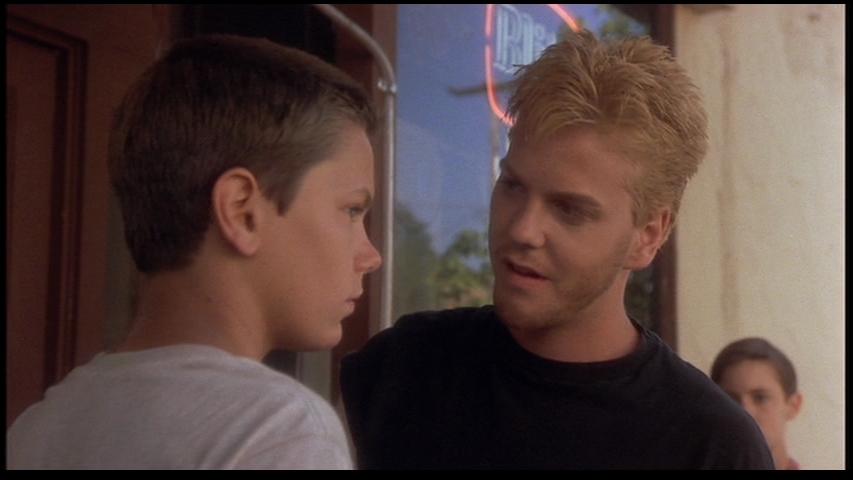
In the film"Stand By Me" the cast & crew said they knew what 
happened to Gordie's cap. Did the audience ever find out? Nope. 
But it helped Keifer Sutherland get into the head of the 
evil "Ace."
Know the life of your characters before and after the book starts even if the information isn’t relevant to the plot. You don’t have to add any of their biography in the book, but if you know your character’s life, he will automatically develop his own unique personality.
For example, if you decide that Tracy loved to ride horses as a kid (a detail that’s never going to find its way into the book), it’ll influence the course of your story meaningfully. Instead of the protagonist meeting Tracy at a cafĂ©, the friends could meet at Tracy’s ranch. Or when Tracy is ending her phone call with the protagonist, she might say, “Take care, sweetheart. I gotta go feed the horses.”
Sure, it’s just a few sentences, but your audience will form a distinct image of Tracy- the girl who likes horses, she’s probably an animal lover, and in good shape because she works at a ranch.

4. Protagonist
Side characters have a life of their own.
Separate from the protagonist.
As mentioned above, the hero is the center of the story, but not necessarily the center of your side character’s lives. Please don’t forget that. My friend wrote a story a while back where the heroine’s husband cheats on her. Sure, the audience is outraged. But then, the husband’s brother is so disgusted, that he disowns his own blood due to the infidelity. I’m not saying that family members can’t scold each other, but my friend forgot that the heroine was not as important to her brother in law as she was to the story.
Hamlet is a good example of this. The man is withering away because of grief, but the kingdom (particularly his mother and uncle) seem to be moving on. We are concerned with him because we are readers, but the other characters have to live their lives.

Think of fairytales, how much do we know about Rapunzel’s parents or even the prince? Now think of who fairytales are intended for. If you want to a story with depth and layers, be sure to make memorable, well developed side characters.

Sunday, 17 March 2013

Munch It Like Mello: Character Types To Work With

                Of course, there’s no set pattern of what kind of characters you can create and every writer has her (or his) own preference. Still, I think there are some basic rules when you’re making a character for your readers to love. In my writing process, I’ve discovered that there are three types of characters that have come up constantly in my work, and there’s only one that I work well with. I’ve described the types below and listed the pros and cons of each.

Angels
                First off and the easiest types are the angels. There’s no simpler way of describing them: they are good. For those of you who are familiar with Death Note, I’d put the Japanese police force in this category. Selfless, honest, hardworking, and a kind of personality that everyone aspires to. Note that, you can never really relate to this kind of a person because your readers have ignored their conscience at least once in their life. For this reason, it’s best not to choose an angel as your protagonist UNLESS he’ll be later faced with a choice of being bad or evil.
                I spent a good two years working with a heroine who was good until one day I realized that I was avoiding writing the parts with her because she was just boring. Regardless of what she did, it was pure, and that kind of predictability can be difficult to work with. Oscar Wilde starts out with Dorian Gray as the epitome of untainted youth but imagine if Gray had remained like that throughout the book! If you need a pure bred angel in your book, make sure it’s a side character, Jane Bingley-type.

Fallen Angels
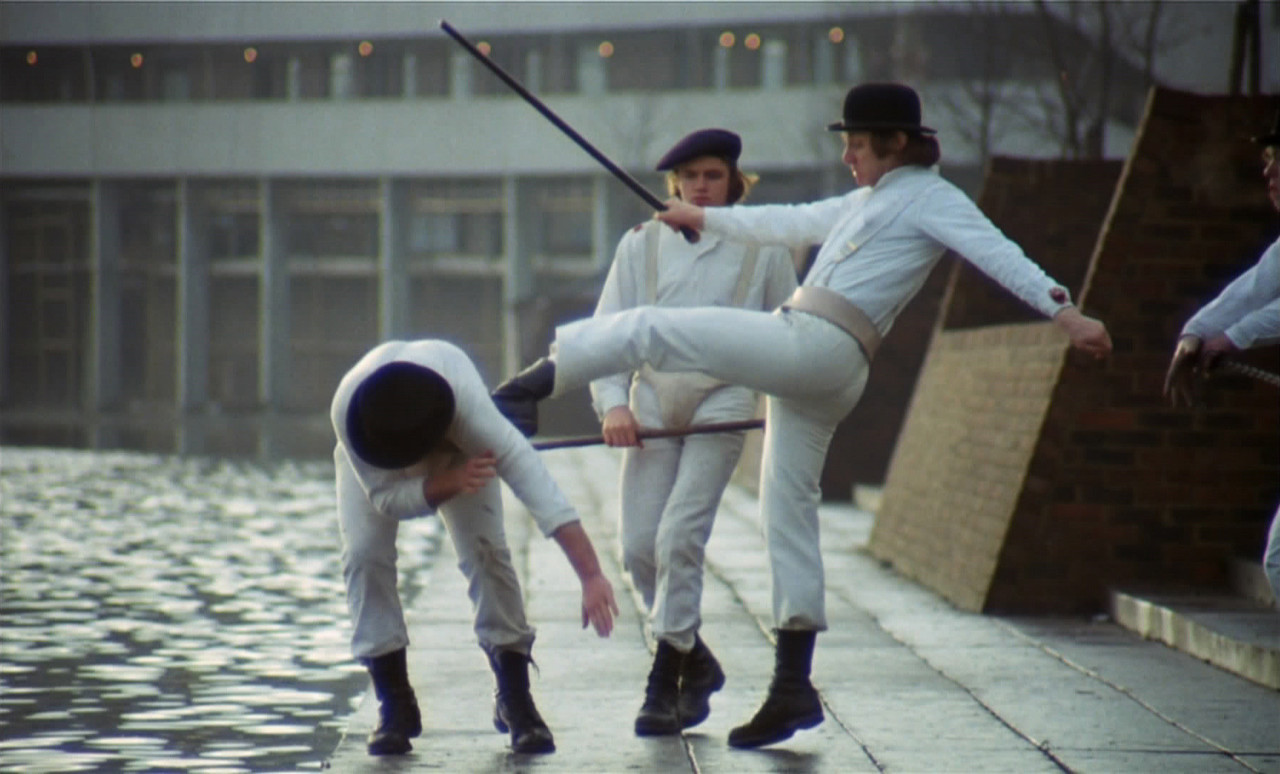
                There’s always a certain charm with a man who willingly chooses the “damn all” attitude and has to face the consequences for it. Usually, fallen angels are the villains of the story, but I’ve seen enough works where the fallen angel makes a compelling protagonist. Clockwork Orange’s Alex Burgess, Death Note’s Raito Yagami, and of course, if you want to go epic, then the original fallen angel of Paradise Lost.
If your hero is a bad guy,
be sure to strike the right balance
                To be honest, I’ve never bothered with this type of protagonist. Mostly because this character type is not my favorite, but if you choose to work with the damned angel as your hero, do it carefully. The charm of the above mentioned characters is not just that they are evil but that you cry for them when their eventual downfall takes place. That’s a tricky balance to achieve when you have to make your hero cruel enough and yet keep the sympathy of the audience. If you can pull this kind of hero off, I’d take my hat off to you. After all, I hated Raito throughout Death Note, but when he died, my eyes had melted into tears.

Flawed Angels
Choose A Character That
Keeps You Guessing
                So now the title of this post makes more sense. The gorgeous looking girl at the side who is actually a gorgeous man is the best example of a flawed angel. These are the characters are almost angels but have that one fatal flaw which clips their wings and keeps heaven’s gates just out of reach. So, they fall down to hell while their thoughts tend upwards (I’m not sure if I just plagiarized Milton).
                I find these the best kind of characters to work with. Readers can relate to such characters much better than the first two types and flawed angels tend to get sympathy galore. But more importantly, there’s scope for complexity in this kind of character. Sure, Death Note’s Mello runs the mafia and kills people, but he’s also the only person to express genuine regret over the death of a friend. These characters are unpredictable because you don’t know which way they’ll go as they have a bit of bad and bit of good in them. As my friend once described it, “Be ready for anything. They can break into a dance, they can kick you in the ass.” And it’s this unpredictability along with the character’s flawed destiny that makes him my favorite type of protagonist.
                The Greeks described the fatal flaw as the “hubris” which means an excess or lack of any one trait that is eventually going to lead to the downfall of the hero. All of Shakespeare’s tragedy heroes have it. Lear, Othello, Coriolanus, and of course,  Mr. To Commit Suicide Or Not To Commit Suicide.

                So, if you haven’t already figured out the kind of character you want your protagonist to be, hopefully, this will help. It took me three good years of experimenting before I achieved the right balance in my characters, so I hope I’ve saved you that much time with your work. Keep writing!